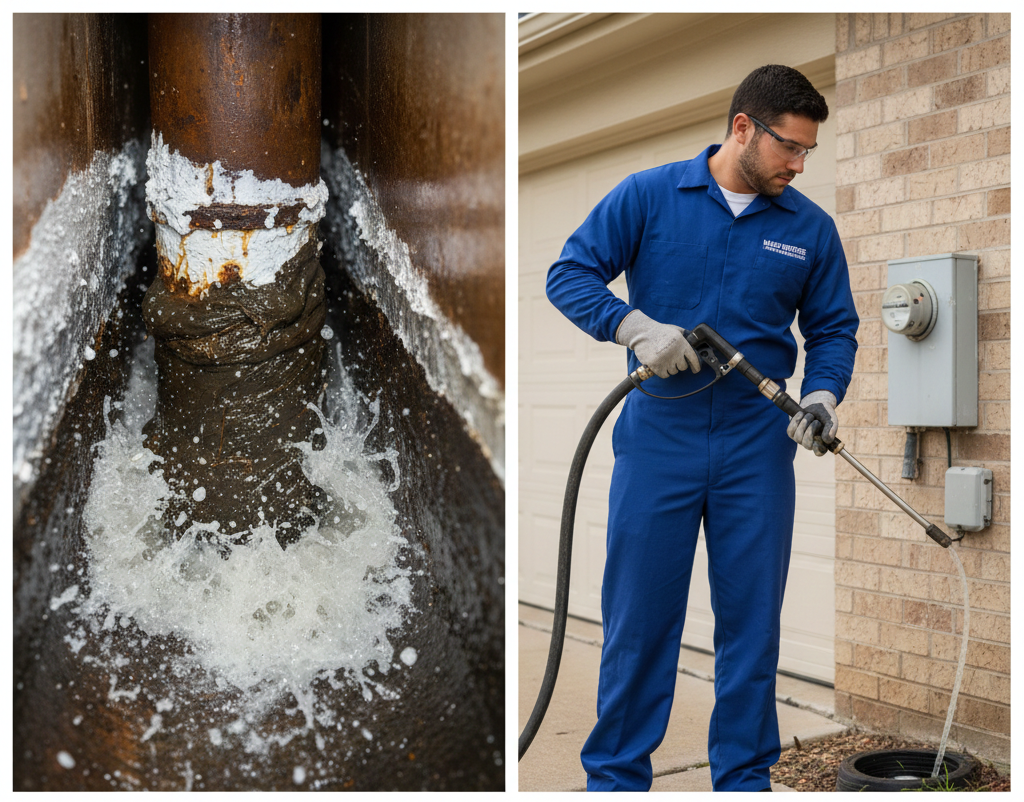
Hydro jetting is a powerful method for cleaning drains and sewer lines using high pressure water. Homeowners and property managers often wonder when to use hydro jetting and whether it is the right choice for their plumbing problem. This article explains common signs that point to hydro jetting as the best solution and compares it to other methods so you can make an informed decision.
The aim here is practical guidance you can act on, with examples from real situations, tips to reduce repeat clogs, and what to expect when a professional performs the work. Read on for straightforward explanations about when hydro jetting will give the best results and when another approach might be safer.
What Hydro Jetting Is and How It Works
Hydro jetting uses a hose with a special nozzle to blast water at very high pressure through pipes. That pressure removes grease, sludge, mineral buildup, soap scum, hair, and small tree roots. Typical equipment ranges from a few hundred to several thousand pounds per square inch depending on the pipe material and the level of buildup.
Unlike chemical cleaners, hydro jetting relies on mechanical force. The nozzle can be selected to deliver a narrow, cutting stream for heavy deposits or wider spray patterns for general rinsing. A camera inspection is often paired with the process so the technician can see the condition of the line before and after the service.
Common Signs You Need Hydro Jetting
There are specific warning signs that indicate hydro jetting may be the most effective fix. Watch for these patterns rather than reacting to a single slow drain.
- Recurring clogs in the same drain after snaking
- Multiple fixtures backing up at once
- Foul sewer odor in the yard or around the home
- Gurgling sounds coming from toilets or drains
- Slow main sewer line flow even after localized cleaning
If you see several of these issues at once there is often a substantial build up affecting flow and capacity. Hydro jetting removes the accumulated material that snaking may only punch a hole through.
When to Choose Hydro Jetting Over Snaking
Plumbers often try a mechanical snake first. That tool works well for a single, localized obstruction such as a hair ball. When the problem returns or when deposits line the interior of the pipe, hydro jetting becomes the better choice. Use hydro jetting when you need thorough interior cleaning rather than a temporary passage.
For example, a commercial kitchen with repeated grease blockages will see much longer intervals between problems after a hydro jetting session compared with snaking. If you are dealing with frequent slow drains across the house, or if video inspection shows substantial buildup, hydro jetting can restore the pipe to near factory smoothness.
If you want a professional service that removes grease, scale, and deposits from the full circumference of the pipe consider hydro jet pipe clearing for a thorough cleaning that reduces the chance of quick recurrence.
Situations Where Hydro Jetting Is Recommended
Hydro jetting is not a universal cure, but it is the preferred choice in several common scenarios. These examples show when the method adds value.
- Grease laden lines in restaurants that accumulate fatty deposits over time
- Older homes with years of soap and mineral scale inside cast iron or clay pipes
- Main sewer lines with root intrusion where cutting action from high pressure removes invading roots near the pipe wall
- Properties with multiple backups across fixtures pointing to a main line restriction
- Prior to camera inspection if a full clean will give a clear view of pipe condition
In commercial settings routine hydro jetting can be part of preventive maintenance. In residential use it is a good choice when snaking fails to stop repeated problems or when a camera shows significant residue on pipe walls.
Limitations and When Not to Use Hydro Jetting
Hydro jetting is powerful and that power can cause harm in certain conditions. It is not suitable for every pipe system and understanding limitations will prevent damage and extra expense.
- Fragile, collapsed, or severely corroded pipes that might fail under pressure
- Very old clay or poorly joined lateral lines where water pressure can open joints
- Small diameter pipes where access for a jetting nozzle is not possible
- Active root invasion that has already displaced pipe alignment
When the pipe has visible cracks, missing sections, or structural failure, replacing the damaged run is safer than cleaning it. A video camera inspection performed by a professional will reveal these conditions so the correct choice can be made.
How Professionals Prepare and What to Expect
A professional approach reduces risk and improves results. Here are the typical steps a trained technician will follow before and during hydro jetting.
Pre inspection and camera evaluation
A video camera is sent down the line to identify blockage type and pipe condition. This step confirms whether the pipe can withstand jetting pressure and helps the technician select nozzle type and pressure setting. The camera also documents damage that might require replacement rather than cleaning.
Setup safety checks and pressure selection
After inspection the crew selects pressure and nozzle based on pipe material, diameter, and the kind of deposits. They will check cleanouts for access, secure the work area, and protect nearby fixtures. During operation the technician monitors flow and camera images to avoid over stressing the line. A follow up camera pass verifies results.
Costs Frequency and Maintenance Tips
Budgeting for hydro jetting requires knowing the factors that affect price and how often the service will be needed.
Factors that affect price
- Length and diameter of the run to be cleaned
- Severity and type of deposits such as grease or mineral scale
- Accessibility of cleanouts and need for excavation
- Travel and local labor rates
- Whether a camera inspection is included
How often to schedule hydro jetting
Frequency depends on use and risk factors. A heavy use commercial line may need jetting quarterly while a residential main sewer with recurring problems might need service once a year. For new homes with little buildup a one off cleaning followed by monitoring is often enough. Keep records of past clogs and the results of camera inspections to make a data based schedule.
Maintenance strategies that reduce the need for frequent jetting include avoiding grease down sinks, using drain screens to catch hair and food particles, and flushing the line with hot water after greasy loads. Enzyme based drain products can help break down organic matter in between professional cleanings. Avoid chemical drain openers that can damage pipe coatings and make inspection harder.
Practical Tips for Homeowners Before Calling a Plumber
There are simple checks you can do that will save time and money. First identify whether the problem is isolated to one fixture or affects many. Single fixture slow drains point to a local clog that a snake may fix. Multiple failing fixtures point to the main line and may benefit from a full cleaning.
- Clear sink traps and clean debris screens
- Run hot water through kitchen sinks after use to help move grease
- Note the frequency of backups and any smells to tell the technician
- Ask the professional for a camera inspection before major work
When you call for a service request give details about where backups occur and any recent changes such as new landscaping that could have introduced roots. This information helps the technician select the right approach and equipment on the first visit.
Hydro jetting is a highly effective cleaning method when used in the right situations. It removes the full circumference of deposits from a pipe and can extend the service life of drain lines when applied safely. However, it is not appropriate for all pipe conditions so a pre service camera inspection is critical to avoid causing damage.
If you are dealing with recurring clogs, multiple fixtures backing up, persistent sewer odor, or a line clogged with grease and scale consider scheduling a professional evaluation. A qualified plumbing service will perform a camera inspection, recommend hydro jetting when appropriate, and provide documentation of the line condition before and after work. For fast access to professional hydro jetting services in the McKinney area and clear information about the process visit the service page linked earlier or call a local licensed plumber to discuss options.
In summary hydro jetting is a strong option for clearing heavy buildup, grease, and minor root intrusion in drains and sewer lines. Choose it when snaking no longer holds, when a camera shows substantial deposits, or when property use creates frequent clogging pressure. Avoid it when pipes are old and fragile or when structural failure is visible. Use preventive habits to extend the time between cleanings and keep records of inspections and past services to guide maintenance. If you suspect a main line problem arrange a video inspection as the first step. That will identify the cause and point you to the safest and most effective solution. Call a licensed professional today to schedule an inspection and find out whether hydro jetting is the right choice for your system.